Monday, February 20, 2012

Announcing the Puppy Protection Act!

Last week Puppy Mill Awareness of SE Mich, the Michigan Humane Society and powerhouse lawmakers announced the Puppy Protection Act at the capital!  

This critical piece of legislation will crack down on puppy mills and put up a roadblock for any puppy mill that’s looking to locate here in Michigan. We will need your help in getting the bills passed. Read more...

Our state must act now to ensure that Michigan never becomes a hot spot for mass-produced puppies sold for profit like are close neighbors Ohio and Indiana. Large-scale breeders will have to provide animals with quality housing (no wire floors), a large enclosure space and sanitary conditions, as well as exercise and veterinary care. The bills will also make sure that these facilities are inspected regularly, something many currently avoid by licensing their dogs individually.

Watch a 2 min video


Left: Senator Steven Bieda (D-Warren), Pam Sordyl,
Cal Morgan (MHS President), Representative Vicki Barnett (
D-Farmington Hills), Senator Rick Jones (R-Lansing),
Terry Mackillop (Roscommon County Animal Control)


Thursday, December 22, 2011

3 Steps to Getting Puppy Mill Pet Stores Out of Your Neighborhood

While a puppy under the tree might seem festive this time of year, the industry that stocks stores like Petland is full of Scrooges.
Pet store puppies are mass-produced by commercial breeders (a.k.a. "puppy mills") who keep hundreds of dogs in cramped, unsanitary conditions, breeding the females over and over. Due to poor veterinary care and little to no socialization, that pet store puppy with the bow around its neck likely has a bunch of health and behavioral problems to unwrap after the holidays.

This cruelty isn't what people want for pets. More than 130,000 people have signed the petition on Change.org asking Petland — the largest puppy-selling pet store chain in the U.S. — to stop supporting puppy mills and choose to offer pet adoptions instead.

Despite the huge public outcry, Petland is digging in, saying they hope to keep selling puppies for decades to come. They need to keep hearing from us so they know this decision will hurt their business.

Petland is built on franchises, which means your local Petland store is probably locally owned. That means individual Petland stores can choose to start changing the company's reputation of cruelty by cutting their ties with puppy mills, so taking action locally can have a big impact.

In Michigan, we only have one Petland left. My group, Puppy Mill Awareness Meetup of Southeast Michigan, has seen six pet stores close down since we started taking on the puppy mill business in our backyard.

Here are a few steps you can take to take on puppy mills in your neighborhood, whether they've come to town in the cages at Petland or at another pet shop:

1) Talk to the Store: Have a local citizen visit the store and speak with the owner or manager. I recommend bringing The Humane Society of the United States' Puppy Friendly Pet Store Pledge to help them become part of the movement trading in puppy sales for adoption programs. Follow-up on the visit with a phone call and a letter. Be polite and professional, and if they don't respond, at least you tried to reach out to them.

2) Start a Petition: Stores survive on consumer demand, and starting a petition is an easy way to start showing what consumers want. Check out the Tip & Guides to walk through starting your own Change.org petition.

3) Keep the Pressure On: There are a lot of ways to pressure a store, from holding an event like a rally or parade nearby, passing out literature on puppy mill cruelty to the store's neighbors, writing your local paper and news channels, and holding weekly protests. (Note: If you're going to protest at the store, remember to check with your city clerk and police department for any local ordinances that might apply.)


You can also hold a virtual protest, by spreading images like the pledges in this post via Facebook, Twitter, and Tumblr, targeting the social media pages of the store in your area. (To download the images, just right-click and "save as.")

Want to join the virtual protest, but don't have a Petland in your area? You can start with these key stores.

Puppy Mill Awareness Meetup has been protesting at Michigan's last remaining Petland all season. We've seen an increasing interest from the media in what we're doing and have talked to dozens of would-be customers to educate them on the truth behind that puppy in the window.

You can help our campaign by signing our petition asking Petland Novi to stop supporting puppy mills. And if you're looking to add a pet to your home this holiday season, please adopt.

Thursday, October 27, 2011

The sad life of Petland puppies

While the puppies in Petland USA stores may look cute in their cages, chances are the puppies have led miserable lives that threaten their health from the day they’re born. Petland USA is the country’s largest chain of stores that sell puppies. Most of Petland’s animals come from puppy mills, where thousands of dogs are bred again and again to supply the pet trade. Dogs are kept in cramped, unsanitary conditions, and they often lack adequate vet care.
There’s hope to stop puppy mill sales at Petland stores. Last month Petland Canada ordered its stores to stop selling puppies, in part due to continuous pressure from animal protection advocates. So Mary Haight, a Change.org member from Chicago, wants Petland USA to do the same. She started a petition on Change.org asking Petland USA to end puppy mill sales in its stores. Click here to sign her petition.

Walk into any major pet store like Petco or PetSmart, and you won’t find puppies for sale. Those stores work with local animal shelters to find homes for the countless animals waiting to be adopted across the country. Yet Petland stores prioritize profit by selling animals from puppy mills, propping up this cruel business.

Puppies bred in puppy mills are often plagued with poor health. Kept in cramped conditions and often housed outside in all types of weather, animals in puppy mills lead a pitiful existence. Puppy mill operators are also known to in-breed puppies, leading to other health and behavior problems.

Each Petland store in the US is an individually-owned franchise, meaning Petland USA’s corporate headquarters can’t ban puppy sales in stores on its own. But Petland USA can stop any new stores from selling puppies, and a strong statement from the corporation would go a long way to putting a stop to its existing stores that buy animals from puppy mills.

Please join Mary Haight in calling on Petland USA to support adoption and speak out against its stores doing business with puppy mills. Sign the petition:
http://www.change.org/petitions/petland-usa-stop-selling-pets-fire-puppy-mills-petland-canada-has

- Cristina and the Change.org team

Thursday, October 20, 2011

Why Michigan needs a “Pet Lemon Law”

Of course animal lovers are not fond of the used-car term “Lemon” when referring to our pet family members.  Some are calling the proposed bill the “Pet Warranty Law”. Whatever the label, most people do not like animals treated as merchandise and wonder why we even allow pet sales when shelter pets are euthanized every day. Well, times are changing and we are headed in that direction. Banning of pet stores in cities is becoming very popular.

Since Michigan has close to 40 puppy selling pet stores across sixteen counties, banning locally would take a lot of time and effort. This would still leave bad breeders pumping pets into our communities.  

Since it is not likely we will ban pet sales all across Michigan in the near future, we can make it a little tougher for the bad guys to profit with legislation that will hold them more accountable. The proposed “Pet Lemon Law” S.B. 574 will not only offer disclosure requirements, such as offering breeder information, but it will hit them in the pocket book if they sell a sick pet.

Puppy Mill Awareness
of Southeast Michigan feels the passing of this bill is one way of exposing the bad practices of the pet trade and will ultimately discourage pet sales. More than half or our pet stores will not release breeder information as they are hiding the fact they work with puppy millers or unlicensed breeders.  

For those of you who have visited any mall pet store, you know the dogs just don’t look right - they are lethargic, shivering, have runny eyes, diarrhea, or a little cough. The puppies more than likely arrived off a semi truck from Minnesota, Missouri or Ohio. If they weren’t sick then, they became sick at the store because the store was not isolating and seeking proper vet care which costs money. Remember, the MDA stopped licensing and regulating pet stores in 2009.  

It is not uncommon for a puppy buyer to face thousands of dollars in vet bills after they discover genetic problems requiring surgery. These items are not covered in any guarantee or warranty.  

Most sick dogs cases go unreported. This is a typical scenario: A family purchases a puppy from a breeder or pet store. They puppy is sick within the first week. They call the pet store that may or  many not cover the first 3 vet visits. If the puppy is still sick or has an expensive diagnosis, the pet store will ask if the family would like to return the puppy.  
Families do not want to RETURN their family members. 
Although the new S.B. 574 allows this an option, it is only an option. The purchaser can choose to have the seller cover some of the vet bills instead. Most states that have pet consumer protection laws like this allow for up to the purchase price. Only a few states allow for up to three times the purchase prices. 
Once the family realizes the store isn’t going to offer additional help, they feel it is their responsibility to care for the sick puppy since they turned down the “Return Option”. They are emotionally invested in their new puppy. If they do find out that they were ripped off and the store has a history of doing this, they may file complaints. They usually don’t have time and don’t want to admit they were duped by the seller. They are already overly stressed out and want to avoid more drama over the experience.  

For every case reported there are probably five more that go unreported. Puppy Mill Awareness tracks sick dog complaints for most all of the local pet stores. Petland Novi alone has close to 50 complaints and The Family Puppy has a whooping 67 with 30 different problems noted – some contagious to humans. Many of them have been reported to us during our staged protests and unreported to authorities.  


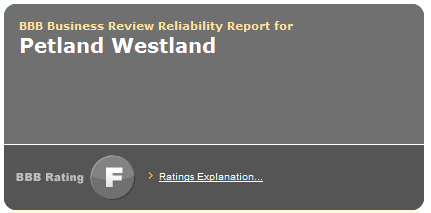
For those families that do feel ripped off and frustrated they often go to the Better Business Bureau to settle the dispute. Other times they end up in small claims court, which places a heavy burden on the purchaser to prove that the seller was aware of a pre-existing condition in the purchased animal.  

Puppy Mill Awareness is behind Sen. Steve Bieda (D-Warren) who is leading S.B. 574, which would offer options for the purchaser, including returning the animal for a full refund and replacement or recovery of veterinary expenses. The bill includes specific time frames for reporting illnesses, maximum amounts a buyer can recover, and provisions for congenital defects in the purchased animals. The bill was updated to include disclosure requirements including breeder information.  

We have been logging sick dog complaints and advocating for consumers by providing counseling and a checklist including agencies who may respond to complaints. That checklist can be found here:
Please take action and let your Senators know that we need stronger laws to protect consumers too by signing this petition.
If you know someone who has been victimized by the pet trade, please have them contact our organization. We are looking for individuals and organizations to testify for S.B. 574.
Pam Sordyl
Founder, Puppy Mill Awareness of Southeast
Michigan
http://www.meetup.com/puppymillawareness/

Tuesday, September 6, 2011

Driving Away Puppy Mills Car Cruise (Boomers)

Oakland County car enthusiasts to drive home the message about the puppy mill/pet store connection
We are hosting a car cruise for their fourth annual Puppy Mill Awareness Day at Boomers Roadhouse, 6650 Highland Road in Waterford, on Tuesday, September 13th from 4:00 p.m. to 8:00 p.m. The cruise is called “Driving Away Puppy Mills” and will offer dog-loving car cruisers a chance to win dog door prizes, auto-door prizes, a 50/50 raffle and a hand-made dog trophy. Local cruisers and car enthusiasts can help promote adoption of homeless dogs by bringing a “nude” photo of their rescued dog for a pin-up contest.
This ‘blow-out’ event is geared toward putting an end to the puppy pet-trade through increased awareness of the many adoption options at local shelters. This is one of several events to be held throughout the week.
The Oakland Pet Adoption Center, the county’s animal control shelter based in Auburn Hills, would like to meet dog lovers interested in adopting new family members and will have an information booth at the event. More information about the Oakland Pet Adoption Center can be found at www.oakgov.com/petadoption/.
Cruise participants are welcome to bring their furry friends along for the ride, but we ask that spectators and the general public please leave their pets at home.
The “Driving Away Puppy Mills” cruise will be sponsored by the North Oakland Bowties Car Club, M&M Services Inc, Simon & LouLou’s Playhouse  and Terry Lee’s Tufts & Tails Grooming. Other event details can be found at www.meetup.com/puppymillawareness/pages/Cruises/.


Thursday, September 1, 2011

Pass “Lemon Law” To Protect Michigan Pet Buyers


A "Pet Lemon Law" has been introduced in Michigan to offer consumer protections for purchasers of dogs, cats and ferrets. Under S.B. 574, people who purchase sick or diseased animals from pet shops, breeders or dealers would have specific recourse against the sellers.

Puppy Mill Awareness of Southeast Michigan applauds Sen. Steve Bieda (D-Warren) for leading S.B. 574, which would offer options for the purchaser, including returning the animal for a full refund and replacement or recovery of veterinary expenses. The bill includes specific time frames for reporting illnesses, maximum amounts a buyer can recover, and provisions for congenital defects in the purchased animals.

The full text of S.B. 574 can be found here: http://legislature.mi.gov/doc.aspx?2011-SB-0574

"This will hold pet sellers accountable for burdening the public with veterinary costs and emotional stress of caring for a sick pet," said Pam Sordyl, founder of Puppy Mill Awareness. "We commend Senator Bieda for addressing this costly problem, and for protecting the additional victims of the pet trade: consumers."

Liz Frates, of Ann Arbor, told Puppy Mill Awareness that she purchased a 16-week-old Yorkshire Terrier from a Michigan breeder for $1,200 in cash last year. She was told that the puppy was healthy. The breeder’s full written pet guarantee against anything congenital or hereditary did not help Liz in court, after the puppy was diagnosed with grade 2 luxating patellas in both legs – a congenital defect requiring surgery totaling nearly $3,200. Liz had already spent $900 in veterinary costs addressing breathing and diarrhea problems that the puppy had endured since his purchase.

“Without laws in place irresponsible breeders have free reign to find loop holes and continue with their unethical practices.” said Frates. “Pet insurance will not cover hereditary, genetic or congenital defects and most people cannot afford the thousands of dollars in vet bills and surgeries to correct such health problems.”

In Michigan, consumers often rely on the Better Business Bureau to settle disputes with pet stores. Other times they end up in small claims court, which places a heavy burden on the purchaser to prove that the seller was aware of a pre-existing condition in the purchased animal.
Puppy Mill Awareness has been logging sick dog complaints in Michigan for three years. “Cases often go unreported to proper authorities. Buyers may complain to the pet store or breeder, only to have their calls unreturned,” said Sordyl. “We advocate for consumers by providing counseling and a checklist including agencies who may respond to complaints.” That checklist can be found here: http://files.meetup.com/1258100/SickPuppyChecklistv8.doc

Puppy Mill Awareness started a petition in support of Michigan's Pet Lemon Law on Change.org, the world's fastest growing platform for social change. By signing the petition, citizens can let their representatives know that they support the law, too. The petition can be found here: http://www.change.org/petitions/the-mi-state-senate-pass-lemon-law-to-protect-michigan-pet-buyers
Puppy Mill Awareness would like to thank Sen. Bieda and the bill co-sponsors for both protecting Michigan consumers and shining the spotlight on the puppy mill/pet store connection.
According to the nonprofit humane education group The Citizens Against Puppy Mills:
http://www.citizensagainstpuppymills.org/pics.php
• Nearly 100% of all puppies in pet stores have parasites when they are purchased.
• 48% of puppies being sold in pet stores were ill or incubating an illness at the time of purchase, according to a recent California study.
• 500,000 puppies are born in puppy mills and sold in pet stores every year in the United States.
• Commercial breeders can make more than $300,000 selling puppies every year.
• Almost every puppy sold in a pet store has a mother who will spend her entire life in a tiny cage, never being petted, never being walked, never being treated like a dog.
• Female dogs are usually bred two times each year. At that rate, they usually burn out by the age of five, at which time they are put to death
The Puppy Mill Awareness Meetup of Southeast Michigan is working to end the mass production of dogs in commercial kennels ("puppy mills"). Our mission is to educate the public about the cruel cycle of commercial dog breeding and the pet store link. Read more about our goals, success stories, activities and studies at http://www.meetup.com/puppymillawareness/about/
###

Wednesday, August 17, 2011

Will Westland Dog Food Co Go Humane?

We send sent letters to the owners of Westland Dog Food Co. located at 37687 Ford Rd., asking them to stop selling puppies that come from puppy mills and instead to feature only rescued and adoptable dogs in their store.

We hope that Westland Dog Food Co. will join the ranks of so many other pet supply stores across the nation and adopt a policy to help stop pet overpopulation.

A formal invitation was sent to Westland Dog Food Co. to stop selling puppies and to take the Puppy Friendly Pet Store pledge through the Humane Society of the United States (HSUS) initiative, along with an offer to support the store during its transition to adoption events only. Westland Dog Food Co. has yet to respond to the group’s requests.

We hope the store will take our request seriousl. We've worked with over 100 Michigan pet supply stores to sign them onto the Puppy Friendly Pet Store pledge. Unfortunately, some other stores have been reluctant to do so, and we then enacted a public campaign to educate the public about the stores’ puppy mill suppliers. Six area stores that sell puppies have closed after such campaigns were launched.

Our investigation of Westland Dog Food Co. shows the puppy store has primarily worked with Missouri breeders and brokers going back to 2001. One such breeder—MAM Kennels in Lamar, Missouri—was featured in an HSUS investigation and was included in their “Missouri’s Dirty Dozen” list. United States Department of Agriculture (USDA) inspection reports show that MAM Kennels was cited for repeated violations of the Animal Welfare Act related to severe overcrowding, lack of shelter or bedding, dogs without the minimum space required, and no veterinary care for two years. One violation report read, “There are 2 dogs - a yellow lab in pen #6 and a rottweiler in pen #64 that have injuries and need to be see by a Veterinarian. The lab is limping on the left front paw. The rottweiler is walking with a humpbacked gait and is very thin. Both of these animals must be seen by a veterinarian to access their medical condition.”

Another breeder who shipped puppies to Westland Dog Food Co. in 2011, David Remey of Boonville, Arkansas, was inspected by the USDA in December 2010. The investigator found that the outside runs of the dog enclosures had a build-up of animal waste. There were areas of the enclosure where the animals could not move freely without coming into contact with feces.

This is disgusting. Michigan families care about their pets, while Westland Dog Food Co. has a history of working with out-of-state breeders who are mistreating their animals.

Over the years, Westland Dog Food Co. has worked with over 40 different out-of-state breeders and brokers, some of whom have also supplied puppies to Petland Novi. Those breeders’ kennel inventories range from 21 to 482 adult dogs.

The Michigan Department of Agriculture launched an investigation of Westland Dog Food Co.’s health certificates after finding that 44 % of its puppies were being imported illegally into the state. From June 2009 to December 2010, 25 of the puppies’ health certificates were rejected for not having the vaccinations required for import into Michigan.

An additional letter was sent to Westland Dog Food Co. this week, saying that if the store does not opt to end its puppy mill connection, the group plans to conduct a public education campaign outside the store. The letter ends with the request, “We would like you to pledge in writing to convert to a humane business model."

September 17, 2011 will mark Puppy Mill Awareness of Southeast Michigan’s 4th Annual Puppy Mill Awareness Day event. Each year we focus our public education efforts on a store that works with large commercial dog breeders. This year, if this store does not decide to adopt a more humane business model, we may be doing such a campaign on Ford Road in Westland.